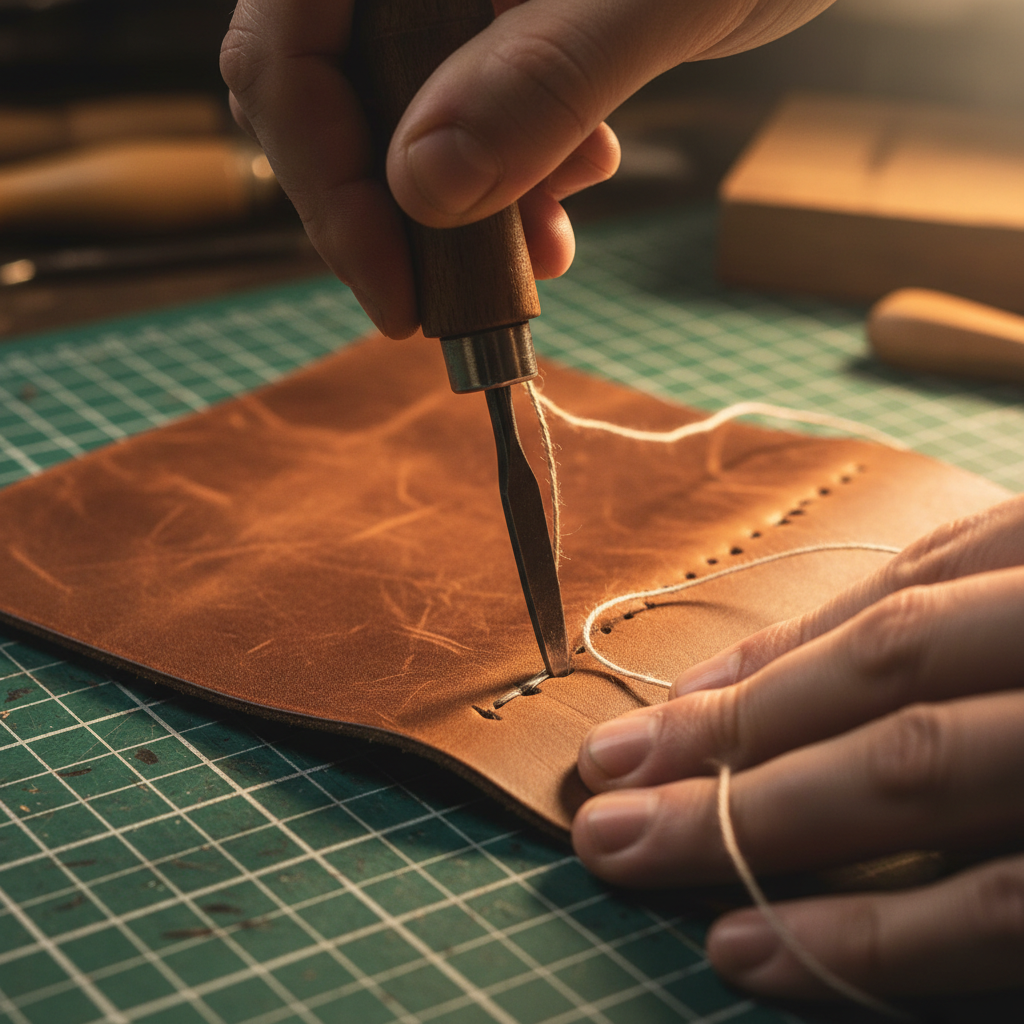
Chapter One
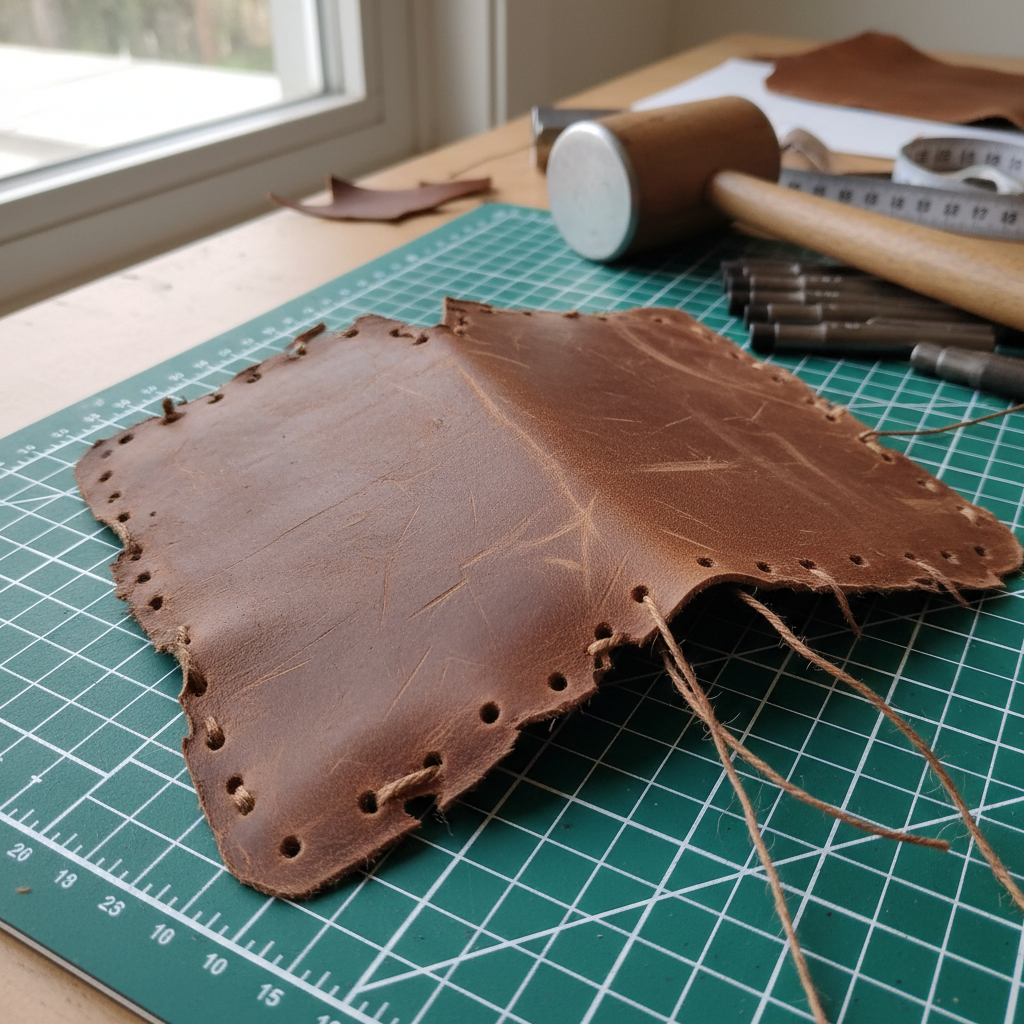
My first wallet. Saddle tan, 4–5oz. The stitching holes are 2mm off-center. I still have it.
My First Terrible Wallet
I bought a side of Hermann Oak for $180 and immediately ruined the first six inches trying to skive an edge I had no business skiving. The swivel knife slipped. The hide buckled. I kept going anyway.
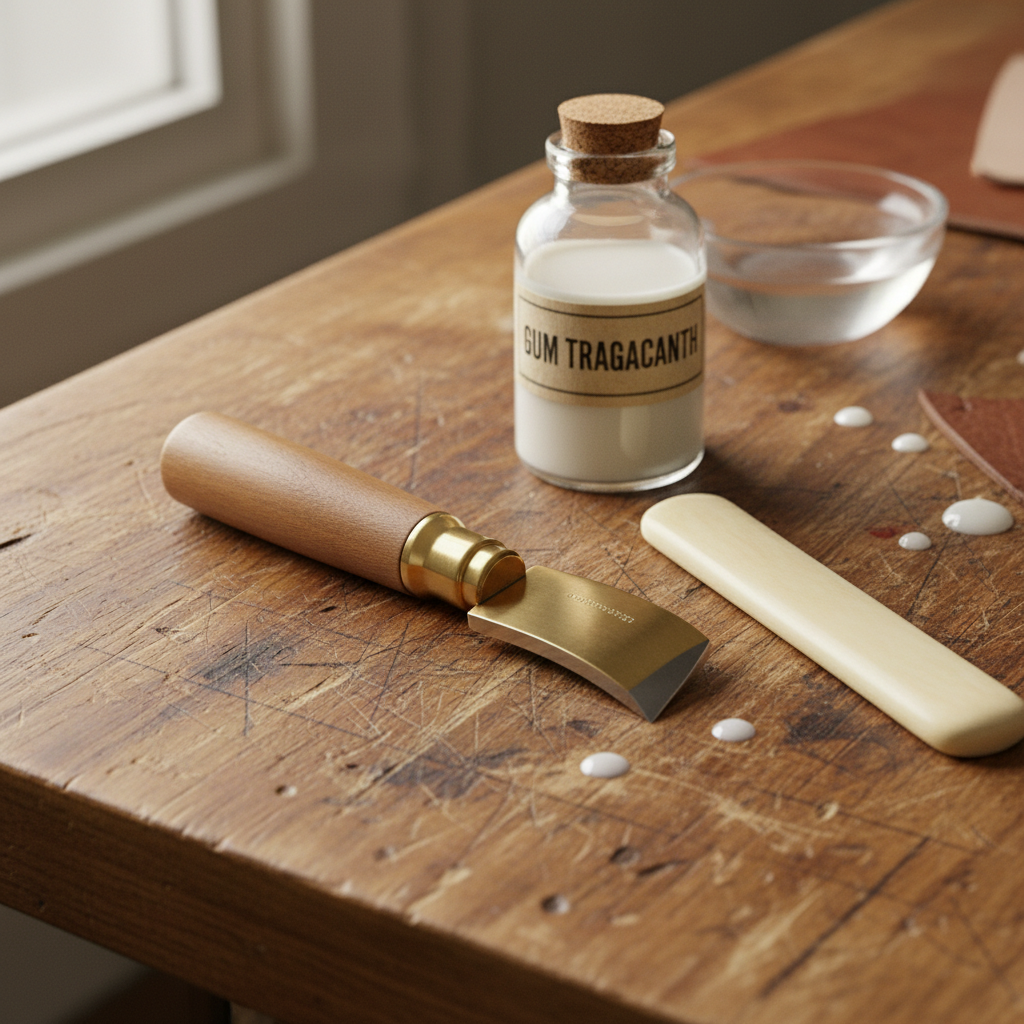
The wallet that came out of that session had stitching holes 2mm off-center on one side, a round corner that was more "oval," and a burnished edge I'd clearly done with the wrong gum tragacanth-to-water ratio.
I put it in my back pocket and carried it for a year. Every time I pulled it out, I could see exactly what I'd learned and what I still didn't know.
Tools used
- Tandy Craftool swivel knife — $18. Fine for starting.
- Vergez Blanchard pricking irons — $65. Worth every cent.
- Hermann Oak 4–5oz veg-tan — $180/side. The only choice.
Chapter Two
The Skiving Lesson Nobody Teaches
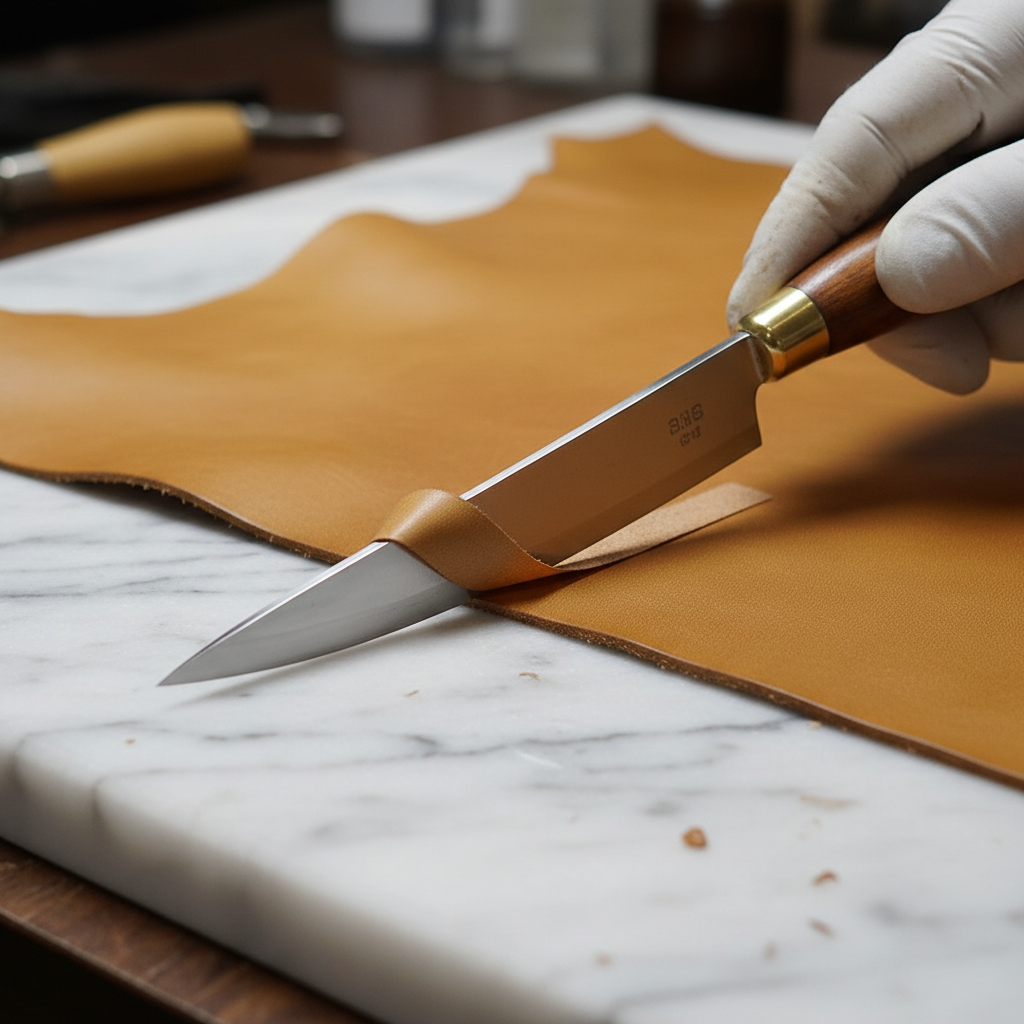
Every tutorial will tell you to skive the fold area to reduce bulk. None of them tell you that the angle of the blade changes completely depending on whether the hide has been case-dampened.
I destroyed eight belt blanks before a fellow craftsperson in a forum — going by the handle "NorthernTack" — replied to my desperate post at 11pm on a Tuesday with a single line: "Dampen it first. 15 minutes. Then skive."
That one sentence saved me $200 in wasted leather. This whole page exists because of moments like that one.
The actual technique
Dampen the skiving area with a damp sponge. Wait 15 min. The fibers relax. Hold your skife at 10–15°, not 30°. One pass, pulling toward you. Check the light.
"The edge is where the amateur and the craftsperson part ways."
— bench note, 2021
Chapter Three
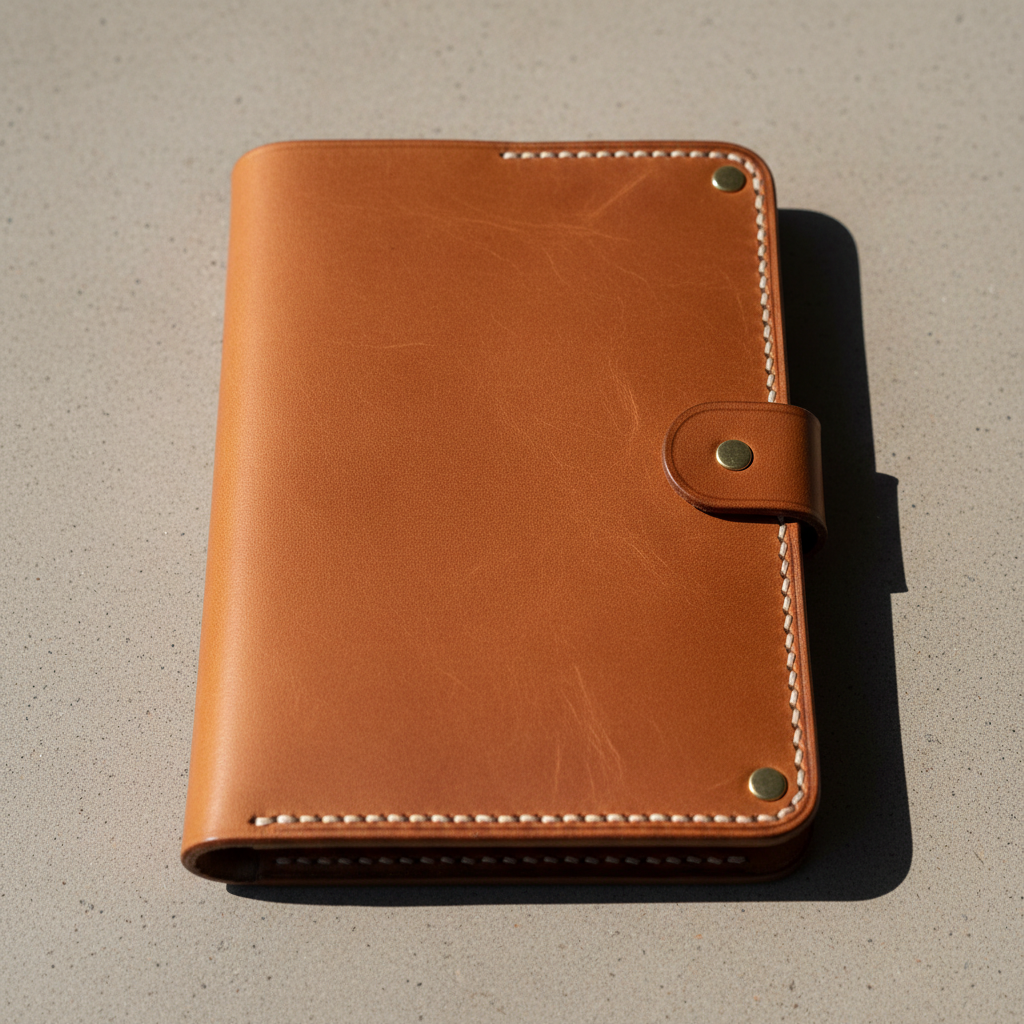
Commission #001
Custom journal cover
A4 · 8–9oz · hand-stitched
The Commission That Paid Rent
A writer found my page through a hashtag. She wanted a journal cover for a manuscript she'd been working on for four years. She didn't want "rustic." She wanted something that felt like the book deserved to exist.
I spent three days on the pattern. The leather was a full-grain Hermann Oak shoulder — the kind with the natural growth marks that most people sand out. I kept them. She cried when she opened the package.
That $340 covered February rent. More importantly, it proved the work had value beyond what I'd let myself charge for it.
What I learned
Price the hours, not the material. A $180 hide becomes a $340 piece when you count 14 hours at any reasonable rate. The customer isn't buying leather — they're buying the years it took to learn to use it.
4,200+ craftspeople following this story